Homelessness
American RustHomelessness in the novel is both a lived condition and a measure of the pressures reshaping the Mon Valley: Isaac English spends nights exposed to the elements after leaving home, while families nearby face foreclosure, disappearing jobs, and a landscape of abandoned buildings. The narrative keeps those experiences distinct. Isaac is a traveler who has left a home he could return to; local housing insecurity threatens people whose ties to the region, and whose prospects for starting over, are different.
Setting and regional context
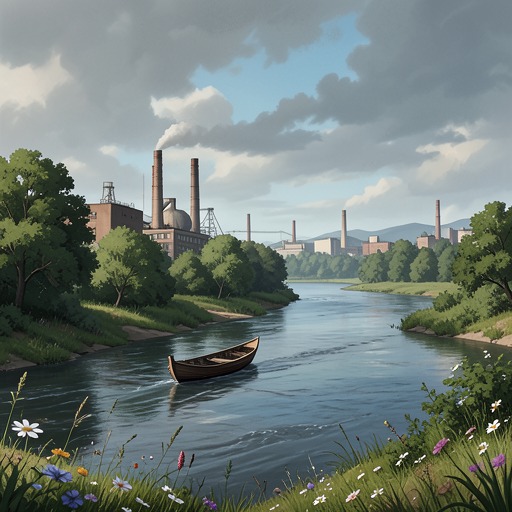
Buell’s surroundings make economic decline visible in the land and built environment. The steel mill, once large enough to resemble a city, closed in 1987 and was partly dismantled a decade later. Vines and trees spread over its remains, while deer and coyotes crossed the grounds and only occasional squatters suggested human use. In town, historic stone buildings and houses remained, but many downtown properties were boarded or abandoned. The contrast is not simply between housed and unhoused: it is between the visible residue of former prosperity and the reduced means available to residents still living there.
That decline has a substantial employment history behind it. The Valley had been a center of steel production for a century, but by the time Isaac English and Billy Poe were born, the area had lost 150,000 jobs. Many towns could no longer afford basic services, and some had little or no police presence. The collapse extended beyond steel into the smaller industries that had depended on the mills. In the novel’s account, homelessness and housing insecurity belong to this wider erosion of work and public capacity, rather than appearing as isolated personal misfortunes.
Isaac English’s rough sleeping
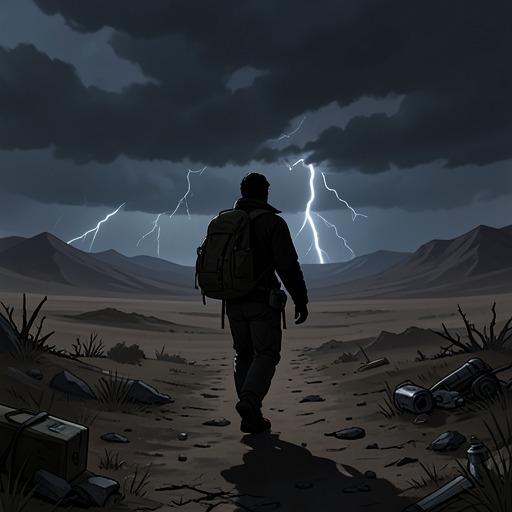
After leaving home with money taken from his father, Isaac English plans to travel by rail toward Pittsburgh and then continue to California. The journey becomes a period of rough sleeping. On foot in the countryside, he rationed the water he carried and kept walking even when the road ended and food was uncertain. As night approached, he gathered brush and leaves against a fallen log to make a cramped shelter. He woke disoriented in the darkness, then recognized where he was and saw a deer outside before closing his eyes again.
The makeshift shelter gives his homelessness a concrete, temporary form: it offers warmth, but neither security nor a settled destination. Isaac’s westward movement is sustained by the hope of reaching somewhere else, even as he recognizes that he does not know where he is going. His status differs from the region’s longer housing crisis: he has fled a house and may return, whereas local families confront foreclosure and a shrinking range of choices. The distinction complicates any simple equation of escape with freedom.
Foreclosure and staying put
Grace Poe’s circumstances show how close economic hardship can bring a family to losing its home without making homelessness inevitable. The trailer had entered foreclosure, but residents picketed sheriff’s sales, and a judge imposed a moratorium after resistance escalated. The measure eventually became law, allowing families such as Grace’s to keep their homes. Her household survived on food-bank supplies and deer Virgil Poe poached; for two years, venison was a major part of their diet. Keeping the trailer meant shelter, but it did not restore financial security or make the region’s limited work options disappear.
The surrounding housing market underscores how sharply place constrains the value of what residents own. Lee English considers a family house that might sell for two million dollars in Boston or Greenwich but perhaps forty thousand in the southern Mon Valley. Nearby, a house had stood empty for twelve years, its For Sale sign weathered away. A new highway toward Pittsburgh carried so little traffic that its emptiness seemed difficult to imagine from the busier I-95 corridor. These details frame housing insecurity not only as the risk of losing a roof, but also as the unequal ability to sell, move, or begin again elsewhere.
Homelessness and the novel’s moral stakes
The novel also places a homeless man at the center of a criminal accusation. When Isaac English returns and says that Billy Poe did not kill him, the statement changes the meaning of Billy’s case and prompts Harris to ask Isaac not to say anything more. The evidence presented here does not establish the full circumstances of the man’s death, but it does show how a homeless person enters the story through a dispute over responsibility and truth. His vulnerability is part of the stakes, even as the immediate narrative attention falls on the people accused and on what they know.
Across these threads, homelessness is not treated as a single, interchangeable experience. Isaac’s exposed nights, Grace’s household narrowly retaining its trailer, the empty houses of the region, and the homeless man in Billy Poe’s case occupy different positions in the same strained social landscape. Their juxtaposition makes visible both the practical importance of shelter and the forces that narrow people’s choices: lost employment, weak local resources, and a housing market in which remaining or leaving can each carry a cost.